
The One Saffron Quality Test Most Buyers Never Use
Most saffron buyers know the classic checks—color strength, aroma, moisture, and lab reports. They’re important, but they’re also expected.
What often goes unnoticed is something much simpler: how the saffron thread behaves when you handle it.
Surprisingly, the physical response of a saffron thread can reveal its age and storage history long before laboratory numbers begin to change.
The “Elastic Snap” Test
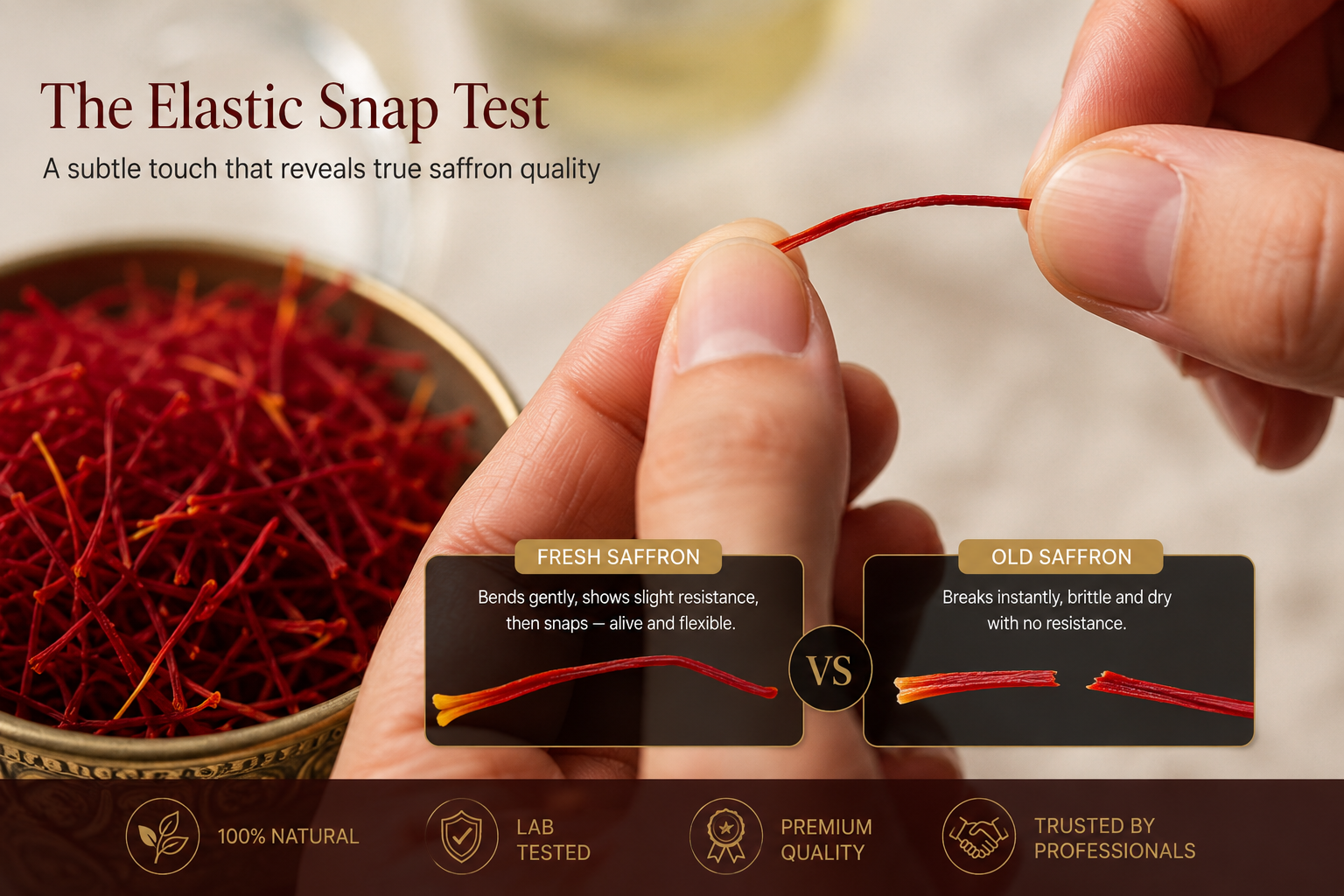
Take a single saffron thread between your fingers and bend it gently.
Fresh, properly stored saffron doesn’t simply break. It offers a slight resistance before snapping, almost like a fine natural fiber. The thread feels alive rather than brittle.
Older saffron behaves differently. Years of oxidation and moisture loss gradually weaken the plant’s cellular structure. Instead of resisting the bend, the thread fractures almost instantly with a dry, glass-like break.
This subtle difference is difficult to describe—but once you’ve experienced it, it becomes remarkably consistent.
Why It Works
The red stigma of saffron is made of microscopic plant cells that naturally contain moisture, essential oils, and flexible cell walls.
As saffron ages—even under acceptable storage conditions—those cell walls slowly lose their elasticity. Oxidation and dehydration make the tissue increasingly fragile.
This change happens before many visual indicators become obvious, making the thread’s mechanical behavior an underrated quality signal.
A Test That Can’t Be Faked
Color can be enhanced.
Moisture can be adjusted.
Packaging can look premium.
But recreating the natural flexibility of a freshly harvested saffron thread is nearly impossible.
That’s why experienced buyers often trust what their fingers tell them just as much as what laboratory reports confirm.
Use It Alongside Laboratory Analysis
This isn’t a replacement for ISO 3632 testing or analytical verification.
Instead, think of it as a fast sensory assessment that helps identify lots deserving closer attention before they ever reach the lab.
Sometimes, the smallest detail reveals the biggest difference.
Leave a Reply